PILLAR FIVE
How beliefs shape the body
Almost every model of emotional health rests on one assumption: that emotions are nervous system events. It sounds like solid science. It is an assumption science has never proven.
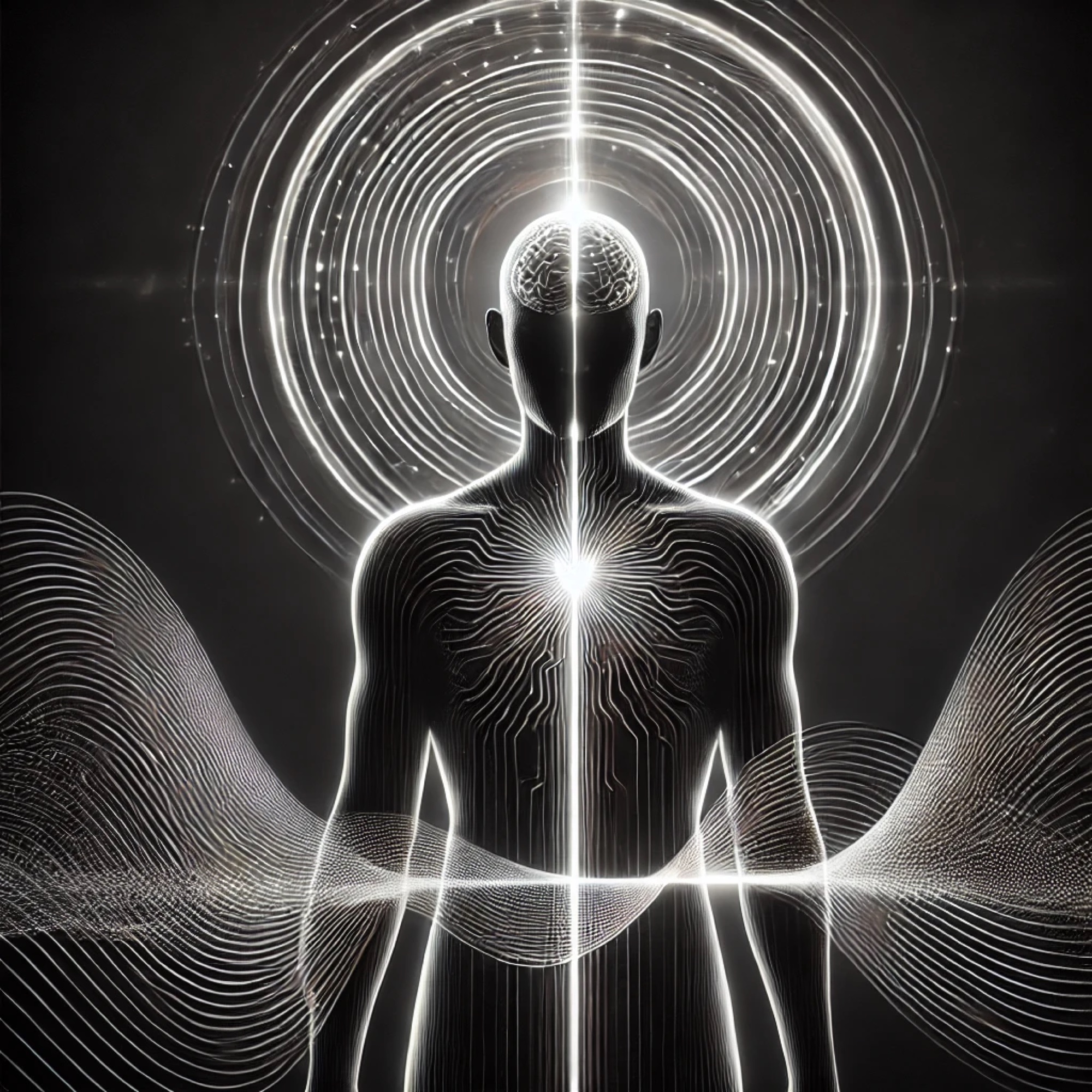
THE ASSUMPTION UNDERNEATH EVERYTHING
Something happens, the nervous system reacts, the reaction produces an emotion
So if you want to change the emotion, regulate the nervous system. Breathwork. Cold exposure. Vagal toning. Somatic release.
Neuroscience has shown that emotions correlate with neural patterns. The brain constructs emotional experience from body signals plus predictions plus meaning. Correlation is not causation. Construction is not origination. No serious neuroscientist claims to have solved how subjective feeling arises from physical process.
She said: I can calm myself faster than ever. I feel more relaxed than ever. And I still feel like the same person.
A practitioner in her early fifties, ten years of somatic therapy, cold plunges, breathwork certificationsShe had spent a decade tuning the sound system and never touched the song. That is the mistake the SIGNAL model corrects.
THE CASCADE
SIGNAL: how consciousness becomes biology
SIGNAL places emotions upstream of the nervous system, not inside it. It describes how your emotional life is composed at one level and performed at another.
- SourceAll possible experience as pure potential. The field everything emerges from.
- IdentityYour essential nature plus your conditioning. Either MUD running on autopilot, or wisdom earned through genuine experience.
- GateYour psychological architecture. The personality set point that decides what gets composed in the first place.
- NeuroThe nervous system translates and performs whatever the Gate composed. It never writes the music.
- AdrenalHormones set the volume, the tempo, and the intensity.
- LymphaticThe immune system is where the story becomes tissue. Years of threat-music warp the walls. Years of coherent music keep the room open.
THE DISTINCTION MOST PEOPLE MISS
Weather is not climate
We use the word emotion for two completely different things. Once you see the difference, a lot of confusion falls away.
| What it is | Where it lives | |
|---|---|---|
| Emotions, the weather | Specific charges attached to specific stories. People always leave triggers grief. I am not enough triggers shame. They arrive, they are intense, and when the trigger passes they settle. | Identity level |
| Emotional tone, the climate | The sustained atmosphere your personality has set. The chronic background that shapes how every individual emotion lands. Some people live somewhere warm where storms pass. Others live somewhere grey 340 days a year. | Gate level |
You can survive any individual storm. You can get better at weathering storms, which is exactly what nervous system regulation does. You cannot outrun your climate. You can edit a hundred stories and still feel like the same person if the tone never shifted. That is what happens to people who do years of good work on individual memories and never feel fundamentally different.
Three tools for three levels
If the architecture is right, transformation needs three distinct tools. Getting them in the right order matters. Confusing them is the most common mistake in the field.
- Rewrite the stories (Identity)Find the MUD. Trace it to its origin. Loosen the emotional charge fused to it, the rebar that makes a story feel true rather than merely believed. This is where individual storms lose their power.
- Rewire the tone (Gate)Shift the climate itself. The personality set point, the chronic atmosphere all your identity structures produce. When the tone shifts, the Gate widens, and the whole style of what gets composed changes.
- Retrain the body (Neuro, Adrenal, Lymphatic)Retune how the body performs the new composition. Breath, movement, nutrition, sleep. These rebuild the instrument and the room. Without this the body defaults to the old performance.
Rewrite without Rewire is insight without embodiment: the client knows and still cannot change under pressure. Rewire without Rewrite is regulation without understanding: calm returns and the pattern regenerates. Retrain without both is behavioral change that collapses under stress.
THE READOUT
What metabolism actually reflects
Metabolism is more than calories. It is the downstream biological readout of the whole cascade.
Appetite and cravings
Usually tied to stress tone, sleep debt and emotional holding, not lack of discipline. The cascade sets the hormonal environment that drives the hunger signal.
Energy and fatigue
When the cascade is running chronic threat, the body shifts into defense and storage. Output drops, recovery gets harder. That is the system doing exactly what it was built to do.
Sleep and recovery
Rumination and hypervigilance directly impair sleep architecture, which cascades into cortisol rhythm, insulin sensitivity, growth hormone and immune repair.
Body composition
Chronic cortisol breaks down muscle, stores visceral fat, suppresses growth hormone and testosterone, and degrades insulin sensitivity.
Inflammation
Chronic anger, frustration, resistance, anxiety, insecurity and depression drive cytokine signaling. Low-grade inflammation is upstream of most metabolic dysfunction.
Consistency
The body becomes predictable when the internal environment becomes predictable. Health behaviors stop feeling like a fight and start feeling like a pattern.
You cannot out-diet a conditioned identity. You cannot out-exercise a chronic stress state. The biological interventions work, and they work far better when the signal has been cleared first.
Questions people ask
What does SIGNAL stand for?
Source, Identity, Gate, Neuro, Adrenal, Lymphatic. It describes how consciousness cascades through identity, psychology, nervous system, hormones and immune function. The critical claim is that emotions are composed at the Gate level, not generated by the nervous system.
Then why does breathwork help at all?
Because the nervous system is the performer. Regulating it builds capacity and reduces reactivity, which is genuinely valuable. It does not change the identity structures or the emotional tone organising what gets performed.
Is this medical advice?
No. This is education and coaching. It can sit alongside medical care. It does not diagnose, treat, or replace a clinician.
Identity change is metabolic change.
Identity, MUD, capacity, behavior and biology are one system. The order you address them decides whether the change holds.